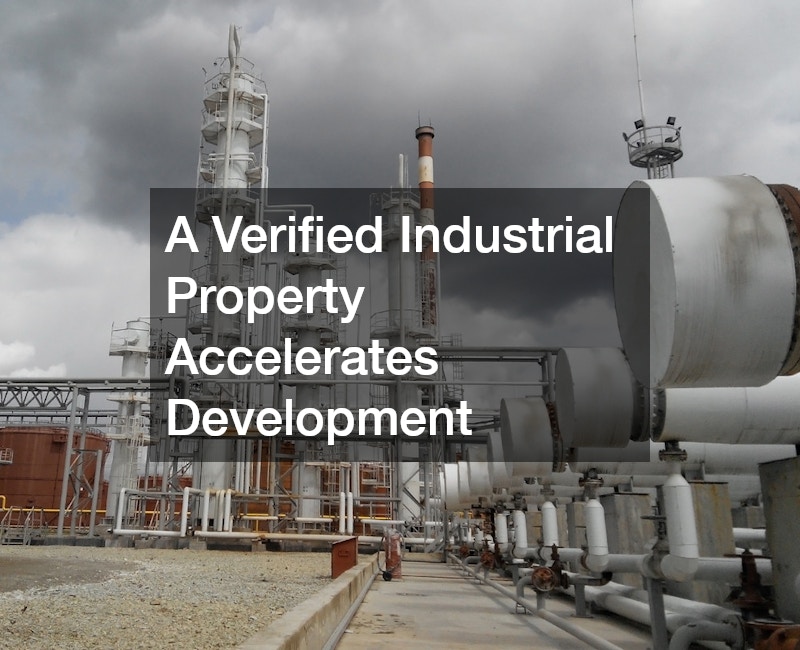
In today’s competitive industrial landscape, quick and efficient site readiness is crucial for both investors and developers. Investing in a verified industrial property provides a distinct advantage by expediting the readiness process. It ensures that all necessary benchmarks and compliance protocols are met, paving the way for smoother construction and operational phases. In this article, we will explore how verified properties significantly cut down on time and resources required for industrial site preparation.
What is Site Readiness in Industrial Development?
Site readiness in industrial development refers to the process of preparing a site so that it is available for construction and subsequent use for industrial purposes. It involves multiple facets such as land evaluation, securing permits, and ensuring infrastructure is compatible with industrial needs. Site readiness ensures that potential challenges are addressed proactively, thus avoiding construction delays. Additionally, a site that is fully prepared harmonizes well with project timelines, optimizing the utilization of both land and resources efficiently. Companies often look for ready sites as it saves them time and reduces the risk typically associated with property development.
The concept of site readiness is fast gaining traction as industries become increasingly conscious of time-to-market requirements. As global competition intensifies, industries strive for efficiency, making site readiness crucial. Properties that have cleared various verification stages become thriving industrial hubs quicker than their unverified counterparts. Verification serves as a validation of compliance with legal and environmental requirements. This ensures smooth acquisitions and transitions for businesses planning to develop these sites.
For industrial sectors driven by deadlines, ready sites represent a strategic advantage. A site’s verification reassures investors of minimized legal entanglements, thereby building confidence. These verifications cover the site’s feasibility, potential hazards, and necessary zoning regulations, further simplifying the project flow. Consequently, it transforms bare land into a capital-ready investment, appreciated for its straightforward readiness to accommodate industrial activities. The streamlined approval processes associated with verified sites also pave the way for quicker project startups.
Why is a Verified Industrial Property Important?
A verified industrial property is one that has undergone meticulous examination and meets specific standards required for industrial use. The importance of such verification cannot be overstated, as it secures the confidence of investors and stakeholders. Industrial development is a significant investment; thus, minimizing risks associated with unverified sites is crucial. Verified properties eliminate the uncertainty linked with unfulfilled criteria that could otherwise stall project advancement. They provide a reliable foundation, ensuring that industrial activities can commence without the threat of unexpected regulatory hurdles.
The assurance that a property meets required legal, environmental, and structural guidelines boosts its attractiveness. Developers prioritize verified properties as these sites present fewer complexities in terms of compliance and permits. The minimization of possible disputes regarding hazards or zoning restrictions further enhances the appeal of these properties. Consequently, verified sites play a pivotal role in expediting the investment decision-making process. They reflect thorough preparation and regulatory approval, thereby aligning with stakeholders’ expectations and timelines.
Furthermore, verified industrial properties enjoy enhanced marketability due to their compliance guarantees. Such properties are often preferred by large enterprises that seek rapid deployment of infrastructure to align with business objectives. A verified site functions as a bankable asset that maintains transparency through documentation of its readiness. By fulfilling lawful and infrastructural pre-requisites, these properties mitigate risks, safeguarding investor interests. The peace of mind afforded by verification incentivizes investment flow into the region, promoting economic growth.
How Does a Verified Industrial Property Accelerate Development?
The acceleration of industrial development through verified properties is primarily due to the reduction of pre-construction delays. A verified property has already cleared important environmental and legal checks, enabling projects to proceed without procedural interruptions. This expedites the groundwork for developers eager to break ground quickly. Reduced administrative hurdles lessen the lead time involved in obtaining necessary construction permits. Thus, the onset of fundamental industrial operations aligns swiftly with strategic business goals.
Verified industrial properties facilitate a seamless handover from planning to execution phases. Developers gain immediate access to a site primed for development, bypassing extensive due diligence stages. This readiness contributes to a synchronized workflow, enabling project teams to focus on core construction tasks. With pre-approved infrastructural capabilities, the integration of utilities like water, electricity, and sewage can occur without delay. Such efficiencies position the verified property as a catalyst for rapid industrialization within its region.
Moreover, the streamlined processes associated with verified sites mean financial savings for developers. Early commencement of construction translates to an earlier return on investment for industrial establishments. Banks and lenders also showcase greater willingness to finance projects on verified lots, recognizing the reduced risk profile. Such financial backing accelerates development progress, further enhancing the site’s economic potential. As industries leverage these properties, the local economic landscape concurrently experiences growth in jobs and infrastructure.
What are the Steps in Achieving Property Verification?
Achieving property verification involves a series of comprehensive evaluations and approvals. Initial stages include thorough geotechnical assessments to ascertain site stability and suitability for industrial use. This is followed by environmental assessments that determine compliance with ecological standards, ensuring minimal environmental impact during and post-construction. Developers must navigate complex zoning regulations, ensuring alignment with local government plans for industrial zones. Securing certifications and clearances for utilities and services infrastructure is another step in this rigorous verification process.
Successful property verification also necessitates collaboration with multidisciplinary experts. Legal advisors ensure all documentation respects current laws, reducing the risk of future legal obstructions. Environmental consultants prepare impact studies, addressing potential ecological concerns, while engineers assess the feasibility of bringing essential utilities to the site. Each of these professionals plays an integral part in satisfying multifaceted requirements leading to comprehensive site verification. Communication with local planning authorities further ensures the site complies with specific municipal guidelines.
Ownership transparency is a critical step, involving the verification of clear and undisputed titles to the land. This often requires a meticulous historical review of land ownership. Once documentation is complete, continuous interaction with relevant bodies ensures adherence to developing regulations. Additionally, stakeholder consultations engage community and industrial experts, facilitating smoother acceptance of development plans. Overall, diligent attention to these steps culminates in a thoroughly verified property ready for industrial transformation.
What Challenges Might Arise in Property Verification?
Despite the benefits, the path to property verification is fraught with challenges that developers must navigate. One significant obstacle is the time-consuming nature of compliance audits required for verification. These audits review numerous aspects including environmental sustainability and adherence to local zoning laws, each potentially slowing down the verification timeline. Documentation bottlenecks may also arise, hindering swift progression in the verification process. Moreover, unexpected geological findings during geotechnical assessments could demand remedial measures, impacting projected development schedules.
Financial considerations also present hurdles in the verification of industrial properties. The cost involved in securing specialized assessments, permits, and necessary legal consultations can be substantial. Smaller developers may encounter budget constraints, delaying, or even halting the verification journey. Furthermore, evolving regulatory landscapes necessitate constant monitoring and potential reassessment of compliance status. This requires ongoing administrative efforts, imposing an additional layer of complexity in the property verification progression.
Lastly, community opposition can arise, challenging proposed developments. Stakeholders may voice concerns over potential environmental impacts or changes in community structure provoked by industrial expansion. Engaging with these community groups becomes essential, seeking to alleviate fears and foster acceptance. Negotiating community alignments alongside compliance pursuits stretches the property verification timeline further. Effectively, developers and stakeholders must proactively address and plan for these myriad challenges to achieve successful property verification.
By investing in a verified industrial property, stakeholders ensure compliance with all necessary regulations, thereby minimizing unforeseen risks. The resultant acceleration of the development process not only boosts investor confidence but also catalyzes industrial growth and regional economic development. Verification secures financial viability, stakeholder assurance, and aligns projects with environmental stewardship. As industrial ambitions continue to rise, emphasizing the value of verified properties as a cornerstone for successful site readiness becomes pivotal.